
What Are GVT Tiles? Manufacturing, Finishes, Uses & Selection Tips
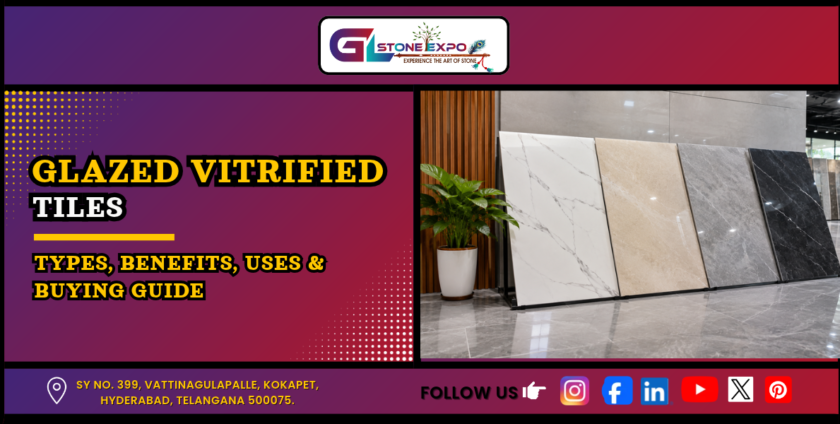
Glazed Vitrified Tiles, popularly known as GVT tiles, are vitrified tiles that have a decorative glazed coat on the surface. The coat holds the print on the tile, be it in the form of marble, wood, or stone, and this is why there are various designs of GVT tiles. This guide will give you information about the manufacture, types, usage places of, and what to consider before purchasing GVT tiles.
What Are Glazed Vitrified Tiles?
What are GVT tiles?
GVT is the term used for vitrified tiles which have their surfaces glazed with printing on them. The body of GVT tiles is made dense through high firing process, while glazing determines its appearance.
What is the full form of GVT tiles?
GVT stands for Glazed Vitrified Tiles.
The process of vitrification refers to firing of clay body to make it dense and non-porous with negligible water absorption capacity. Glaze is the coating applied on top of the tile which is made up of glass. On the other hand, full body vitrified tiles are those where there is no coating layer of glazing and hence colour comes from the body only.
How Are GVT Tiles Manufactured?
- Preparation of raw materials: clay, silica, feldspar, and similar substances are chosen for the production process.
- Mixture and grinding: all the materials are mixed into a single mixture.
- Pressing: The mixture is then pressed to form the tile shape.
- Drying and firing: Tiles are dried and heated to very high temperatures, where vitrification takes place.
- Glazing: Decorative layer of glaze is applied on the tiles.
- Printing: Designs are printed through digital printing process, making the process more real and giving effects of marble veins, wood grain, and stone texture.
- Inspection: Size, surface quality, and shades are inspected before sorting and packaging.
Every product differs in terms of exact temperatures and processes, so always depend upon the product specifications only.
Types of GVT Tiles
These are design and finish categories, not separate manufacturing classes. One tile can be digital, marble-look and glossy at the same time.
- Digital GVT: designs are printed using digital technology, so patterns look sharp and detailed.
- Marble-look GVT: copies natural marble veining and colour variation. A popular choice for living rooms.
- Wooden-look GVT: gives a wood-plank appearance without the upkeep of real wood. Often chosen for bedrooms.
- Stone-look GVT: mimics slate, granite or sandstone textures for a more natural feel.
- Matt finish: non-reflective and softer on the eye. Good where you want less glare.
- Glossy finish: reflects light and makes a space look brighter, but shows marks more and can be slippery when wet.
Benefits of GVT Tiles
- Design variety: there are many options such as marble, wood, stone, and simple design.
- Different finishes: matte, gloss, and textured finishes can be used to get an appropriate finish for the tile.
- Water resistant: water resistance varies depending upon the product; however, low water resistance is a common feature of this type of tiles.
- Ease of cleaning: it just needs regular sweeping and mopping.
- Multiple applications: can be used for flooring as well as wall covering in many situations.
- Consistency in patterns: designs remain consistent in a particular collection.
Not all the GVT tiles are scratch proof, stain proof, or waterproof.
Disadvantages of GVT Tiles
- The glaze might also be worn away through time depending on the tile quality and the amount of foot traffic.
- Some shiny glazes may become slippery once they get wet.
- The surface might easily scratch or chip due to unsuitable conditions where the chip shows the body color of the tile.
- It is hard to find matching tiles for a discontinued design, hence, buy a bit more at first.
- Bad installation will cause defects that even high-quality tiles cannot correct.
- Polished and matte tiles require different maintenance techniques.
Where Can GVT Tiles Be Used?
Living room and bedroom areas can go with marble finish, wood finish, and matt finish. Kitchen areas need a matt and texture finish that is easy to clean and does not make the floor slippery. Bathrooms require a real anti-slip floor; hence no glossy tile should be used for bathroom areas since it becomes slippery when wet. The office, showroom and retail areas can go with large format GVT depending on foot traffic.
| Area | Suitable GVT Design or Finish | Key Consideration |
| Living Room | Marble-look or glossy | Looks and upkeep |
| Bedroom | Wooden-look or matt | Comfort and design |
| Kitchen | Matt or textured | Cleaning and slip resistance |
| Bathroom | Textured, anti-slip | Wet-area safety |
| Office | Durable GVT | Foot traffic |
| Showroom | Large-format decorative | Maintenance and appearance |
| Feature Wall | Marble or stone-look | Design and installation |
GVT vs PGVT Tiles: What Is the Difference?
PGVT stands for Polished Glazed Vitrified Tiles. It is not a separate tile body. It is a polished category within the glazed vitrified family, which means every PGVT is a GVT, but not every GVT is polished.
| Factor | GVT Tiles | PGVT Tiles |
| Full form | Glazed Vitrified Tiles | Polished Glazed Vitrified Tiles |
| Surface | Glazed decorative surface | Glazed and polished surface |
| Appearance | Matt, satin or other finishes | Generally reflective |
| Maintenance | Depends on finish | May show fingerprints and water marks more |
| Application | Depends on finish and specification | Common in decorative interiors |
Which is better, GVT or PGVT?
Neither is better in every case. Pick PGVT for a bright, mirror-like look in dry interiors. Pick a matt or textured GVT where grip and low glare matter more.
GVT vs Double Charge vs Full Body Tiles
| Factor | GVT | Double Charge | Full Body |
| Construction | Glazed decorative surface | Two pressed layers | Colour runs through the body |
| Design | Wide range of printed designs | Decorative upper layer | Depends on body composition |
| Minor chipping | May show the body below | Depends on the upper layer | Usually less noticeable |
| Best for | Design and finish choice | Wear on the decorative layer | Construction and application |
If design variety is your first priority, GVT usually gives the widest choice. If you expect heavy wear or chipping, ask your supplier about double-charge or full-body options.
Are GVT Tiles Waterproof and Durable?
Are GVT tiles waterproof?
Not really. Water resistance of vitrified body is high, but water may still enter through grout joints and substandard installations. GVT is therefore water resistant rather than a waterproofing material and bathrooms and kitchens will require separate waterproofing below the tile layer.
How durable are GVT tiles?
It will vary with individual product, quality of glaze, pedestrian traffic and installation and maintenance. Defining a definite lifetime would be unrealistic and hence, get technical details from the manufacturer’s side.
How to Choose the Best GVT Tiles
| Buying Factor | What to Check |
| Application | Where the tile will be used |
| Surface finish | Matt, glossy or textured |
| Design | Marble, wood, stone or plain |
| Size | Suits the room and layout |
| Slip resistance | Rating for the intended area |
| Quality | Manufacturer specifications and thickness |
| Shade | Consistency across boxes |
| Installation | Correct adhesive and skilled workmanship |
| Maintenance | Cleaning needs of the finish |
Look closely at the glaze for visible defects, check that edges are clean and straight, and compare tiles from different boxes under daylight. Ask to see technical documentation, and where possible visit a showroom instead of buying from a photo.
GVT Tiles Price: What Affects the Cost?
Prices will be influenced by the brand, size, thickness, finish, intricacy of design and the quality and uniformity thereof. Transportation and installation cost will also have to be factored into the total cost. Do not just pick on the basis of price but rather evaluate similar tiles for specifications and finish quality.
How to Clean and Maintain GVT Tiles
- Sweep or dry-mop daily to remove grit that can scratch the glaze.
- Mop with water and a mild cleaner. Avoid harsh chemicals unless the manufacturer allows them.
- Wipe spills quickly, especially oil, tea and coloured liquids.
- Use felt pads under furniture and avoid dragging heavy items.
- Keep grout joints clean and sealed where needed.
- Use soft mops on polished tiles to avoid dull patches.
Buyers Ask Questions
GVT or ceramic?
GVT has a denser body and low water absorption, and ceramic is usually lighter and used mostly on walls and light-use floors.
GVT or porcelain?
Both are dense, but porcelain is a wider category and GVT refers specifically to the glazed, printed type.
Can GVT go outdoors?
Only if the specific tile is rated for it.
Kitchen countertops?
Not usually recommended, so check with your supplier.
Over existing flooring?
Sometimes possible, but the old surface must be sound and level.
Do GVT tiles lose shine?
Glossy ones can dull with abrasion and wrong cleaners, so regular gentle care helps.
Explore GVT Tiles in Hyderabad
Seeing tiles in person tells you more than any catalogue. At a showroom, look at the designs in daylight, compare matt and glossy samples, check sizes and ask for the product specifications. GL Stone Expo is a stone and tile showroom in Kokapet, Hyderabad. You are welcome to visit and talk through which GVT tiles suit your rooms and budget.
Conclusion
GVT tiles offer a wide choice of designs and finishes on a dense vitrified body. The right pick depends on the room, the finish and the actual product specification. Choose with the application in mind, buy a little extra, and get the installation done properly.
Frequently Asked Questions – (FAQs)
What are glazed vitrified tiles?
Vitrified tiles with a decorative glaze and printed design on the surface, sitting over a dense, low-absorption body.
What is the difference between GVT and PGVT?
PGVT is the polished version of GVT. Every PGVT is a GVT, but a GVT can also be matt, satin or textured.
Are GVT tiles good for flooring?
Yes, in most homes and light commercial spaces, if you choose the right finish and have them installed well.
Are GVT tiles waterproof?
They are water-resistant, not fully waterproof. Grout joints and installation decide how well a floor handles water.
Are GVT tiles slippery?
Glossy ones can be when wet. For bathrooms and balconies, choose matt or textured tiles with a suitable slip-resistance rating.
What are the disadvantages of GVT tiles?
The glaze can wear, glossy tiles can be slippery, and surfaces may scratch or chip. Discontinued designs are also hard to match.
Can GVT tiles be used for walls?
Yes. Many designs work as wall cladding or feature walls, provided the right adhesive and installation method are used.
How do you clean GVT tiles?
Sweep daily, mop with water and a mild cleaner, wipe spills quickly and avoid harsh chemicals or abrasive scrubbers.
Visit our Kokapet showroom or send us an enquiry — our team will help you choose the right stone, finish and size for your space.
Kokapet showroom · Open Mon–Sun, 9 AM – 8 PM


Leave a Reply