
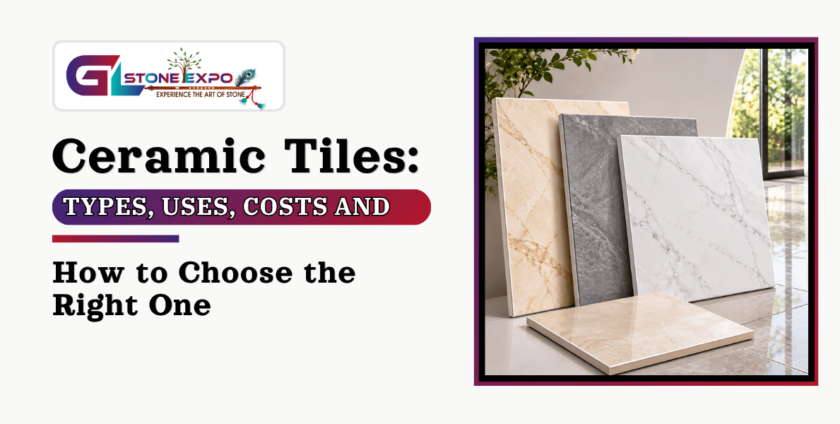
Ceramic Tiles: Types, Uses, Costs and How to Choose the Right One
Typically, tile selection begins from a photograph of the tile you love and concludes with twelve questions, like “Does it crack?”, “Is it slippery?”, “Can I put it on my floor or just on the wall?” and so forth. “How expensive is it once the tiler has done the work?”
Here, you will find answers to all these questions in a simple way. This guide describes what ceramic tiles are, what is made of, various kinds, differences between ceramic, vitrified, porcelain and natural stone tiles, how to interpret specifications, installation and maintenance of ceramic tiles, and what should be done when some problems occur. If you are interested in learning more about ceramic tiles, here is a place to begin.
What Are Ceramic Tiles?
Ceramic tiles refer to clay tiles which are formed and then dried and baked in a kiln. They are normally coated with an outer layer which gives the color and design, and are used extensively for walls and floors since they are cheap and available in many designs.
It is always important to understand a ceramic tile as having two components. There is the body, which refers to the baked layer of the clay mixture below, and there is the glaze, which is the upper glass layer which gives the appearance. The body determines the durability and porosity of the tiles while the glaze gives its appearance and resistance to dirt.
This is the reason why two similar appearing tiles in the showroom may behave completely differently at home.
What Are Ceramic Tiles Made Of?
These minerals are mixed together by manufacturers and the proportion will differ from one manufacturer to another.
• Clay and Kaolin: help to shape the mixture before firing.
• Feldspar: helps to bind and strengthen the body during the firing process.
• Silica (sand): strengthens the body.
• Glaze and pigments: provide color, shine and printing on the surface.
Since the proportion of each element will differ, one must not assume that the performance of all ceramic tiles is the same. The data sheet explains the performance capability of a particular tile.
How Are Ceramic Tiles Made?
Producing a tile is a well-regulated process that needs to follow certain steps. Understanding how it works gives insight into what determines the difference in quality of different factories.
1. Choice of raw materials and grinding.
2. Blending and drying of the mixture to powder form.
3. Pressing the powder to the tile form.
4. Drying of the tile.
5. Applying glazing or a printed pattern.
6. Firing the tile in the kiln.
7. Checking and sorting of the tile before packaging.
The processes depend on the factory and product. The sorting is essential because the tiles are sorted according to their size precision, surface and color. That’s why all the tiles from one pack have a similar appearance while those produced at different times – don’t.
Types of Ceramic Tiles
There are three categories of ceramic tiles based on their surfaces, application purpose and appearances. These categories overlap, and thus a glazed ceramic tile may also be a wall or decorative tile at the same time.
Glazed tiles have a coat applied to their surface. They have the broadest range of colour options available and are easy to clean, and that is why they are often chosen for kitchens and bathrooms.
Unglazed tiles expose the baked body of a tile. They have a natural appearance and sometimes may require more effort in cleaning up stains.
Wall tiles are relatively lightweight and thin. It is not advisable to use them as floor tiles unless the manufacturer recommends it.
Floor tiles are made to withstand walking and being stepped on as well as being used for furniture placement. They tend to be thick and durable.
Decorative tiles consist of patterned, highlighter and feature tiles.
Ceramic vs Vitrified vs Porcelain Tiles
This is the question that customers ask most often. Porcelain is a dense material with low absorption capacity which belongs to the ceramic class, while the tiles made of vitreous are usually sold as another low absorption material. The key difference at the store lies in the performance of the material – its absorption and traffic resistance.
| Feature | Ceramic | Vitrified | Porcelain |
| Water absorption | Usually higher | Low | Very low |
| Typical use | Walls, light-traffic floors | Floors, busy rooms | Floors, wet and demanding areas |
| Cost | Usually lower | Mid to higher | Often higher |
| Cutting | Easier | Harder | Harder |
Absorption depends on the product used, so one should always refer to the technical data sheet rather than the label only. In case of kitchen and bathroom walls, the use of ceramic is usually the rational economical option. As for floors, it is more rational to choose dense tiles.
Advantages and Disadvantages of Ceramic Tiles
There is no material that is perfect. Let us take a fair view of both the positive and negative aspects of ceramic to help you decide whether you would like it for your project.
Advantages: great variety of designs, affordable choices, easy maintenance on a regular basis, and durability when correctly installed.
Disadvantages: can easily chip or break when impacted, hard surface, requires regular cleaning of the grout between tiles, becomes slippery when it gets wet, and does not have an easy replacement after years when you need it.
All the above-mentioned Disadvantages can be minimized when ceramic is selected based on the right location and properly installed.
Where Should You Use Ceramic Tiles?
Ceramic tiles can be used in numerous places throughout the house, but not all ceramic tiles are suitable for every location. This is shown in the table that follows.
| Area | Good fit? | What to check |
| Kitchen walls | Yes | Easy-to-wipe glaze |
| Bathroom walls | Yes | Moisture-ready installation |
| Living room floors | Only if floor-rated | Wear rating |
| Bathroom floors | With care | Anti-slip finish |
| Balconies | Only if made for outdoors | Weather and slip suitability |
Ceramic Tile Properties and Technical Specifications
The five things that tell you what a ceramic tile can really do are water absorption, wear (abrasion) rating, slip resistance, breaking strength and dimensional accuracy. Looks never show these, so ask for the manufacturer’s data sheet before you buy.
| Property | What it means in plain words | What to look for |
| Water absorption | How much water the tile body soaks up, shown as a percentage | Lower is denser. Wall tiles usually absorb more than floor tiles |
| Abrasion resistance (PEI class 1 to 5) | How well the glaze resists wear from footsteps and grit | Class 1 to 2 for walls and light use, class 3 and above for floors |
| Slip resistance | Grip when the surface is wet or dry | Check the rating given by the maker, such as R-ratings or a wet friction value |
| Breaking strength | How much load the tile takes before it breaks | Floor tiles need higher values than wall tiles |
| Dimensional accuracy and warpage | How close the tiles are to the stated size and how flat they are | Even sizes give neat, narrow grout lines |
| Frost resistance | Whether the tile survives freezing | Matters only for outdoor use in cold regions |
| Shade variation | How much colour differs between tiles | Check the batch information and shade rating, if given |
Water Absorption Groups
International tile standards such as ISO 13006 sort tiles by how much water they absorb. This is the clearest way to see where ceramic, vitrified and porcelain tiles sit.
| Group | Water absorption | Typical product |
| BIa | 0.5% or less | Porcelain and fully vitrified tiles |
| BIb | Above 0.5% up to 3% | Dense floor tiles |
| BIIa and BIIb | Above 3% up to 10% | Semi-dense floor and wall tiles |
| BIII | Above 10% | Traditional glazed ceramic wall tiles |
Indian products are covered by BIS standards for pressed ceramic tiles (commonly referred to as IS 15622) alongside ISO test methods. Confirm the current standard and the exact class on the maker’s data sheet instead of relying on a showroom label.
Ceramic Tile Sizes and Thickness
There are ceramic tiles available in various sizes, small, medium and large sizes. Your choice of size will determine the look of the room as well as cutting and waste requirements. The following are just a few of the many available sizes.
| Use | Common sizes (mm) | Approx. inches | Typical thickness |
| Small wall and decorative tiles | 200 x 300, 250 x 375 | 8 x 12, 10 x 15 | About 6 to 8 mm |
| Standard wall tiles | 300 x 450, 300 x 600 | 12 x 18, 12 x 24 | About 7 to 9 mm |
| Floor tiles | 300 x 300, 400 x 400, 600 x 600 | 12 x 12, 16 x 16, 24 x 24 | About 8 to 10 mm |
| Large formats | 600 x 1200 and above | 24 x 48 and above | Varies by product |
Small-sized tiles are ideal for small bathrooms and uneven surfaces although there will be many grout lines. Large tiles will give an impression of space and require cleaning fewer joints but require an extremely level base. It is important to check the appropriate tile thickness from the manufacturer.
Ceramic Tile Finishes Compared
Glossy, matt, satin and textured are surface finishes. They change how a tile looks and feels, but they do not by themselves prove how strong or slip-resistant it is.
| Finish | Look and feel | Best for | Watch out for |
| Glossy | Shiny, reflects light, makes rooms look brighter | Kitchen and bathroom walls, backsplashes | Slippery on floors when wet, shows water marks |
| Matt | Flat, soft, low glare | Living room and bedroom floors, bathroom floors | Can hold dirt if the surface is slightly rough |
| Satin | Between gloss and matt | Walls and light-use floors | Check the grip rating before using on floors |
| Textured or anti-skid | Raised or rough surface for grip | Bathroom floors, steps, wet zones | Harder to clean, dirt settles in the texture |
| Printed or patterned | Wood, stone, cement and geometric looks | Feature walls, accents, floors if rated | Pattern repeat and shade differences between boxes |
A simple rule helps here. Shine for walls, grip for wet floors, and softness of colour for rooms you spend the most time in.
Ceramic Tiles vs Granite, Marble and Vinyl
Ceramic tiles usually cost less and are easier to maintain than natural stone, while stone brings a one-of-a-kind natural look and vinyl brings softness and speed of installation. No option wins in every room, so the right choice depends on your budget, the room and how much upkeep you are happy to do.
| Feature | Ceramic tiles | Granite | Marble | Vinyl flooring |
| Material | Fired clay, mostly glazed | Natural igneous stone | Natural metamorphic stone | Synthetic, layered plastic |
| Look | Huge range of designs and prints | Speckled natural patterns | Veined, classic luxury look | Wood, stone and tile prints |
| Upkeep | Wipe clean, grout needs care | Needs polishing and sometimes sealing | Stains and scratches easily, needs sealing | Simple, but can dent or fade |
| Hardness | Hard, can chip on impact | Very hard | Softer, scratches | Soft and cushioned |
| Cost | Generally lower | Generally higher | Generally higher | Varies, often lower |
| Installation | Needs adhesive, grout and cure time | Heavy, needs skilled fitting | Heavy, needs skilled fitting | Often quick |
| Best use | Walls, kitchens, bathrooms, floors if rated | Kitchen counters, floors | Living areas, feature spaces | Bedrooms, rentals, quick makeovers |
How to Choose Ceramic Tiles
Selecting tiles becomes more straightforward when there is a proper order to be followed.
- Choose between wall or floor tiles first: This step alone eliminates half the options you have.
- Select finish per room: Matte or textured finishes for wet areas and glossy finishes for dry walls.
- Read the data sheet: Check for water absorption capacity, slip-resistance properties, and wear rating.
- Open several boxes: Inspect for any chips, warping, and inconsistent sizing.
- Check batch numbers: Tiles from a different batch can have different coloring.
- Quantity calculation: Check the worked example below.
How Many Tiles Do You Need?
Multiply room length by width, divide by the area of one tile, then add extra for cuts and breakage.
Example: a 10 ft by 12 ft room is 120 sq ft. A 2 ft by 2 ft tile covers 4 sq ft, so you need 30 tiles. Adding roughly 10 percent for cuts gives 33 tiles. Complex layouts or diagonal patterns usually need more, so ask your installer before you order.
How to Install Ceramic Tiles: What Homeowners Should Know
Good installation is as important as the quality of the tile. Most cracked, hollow and loose tiles have problems either with the substrate or with the adhesive used rather than the tile. The professional installer must follow the tile and adhesive manufacturer’s directions, but this is what needs to be done generally.
- Preparation of the substrate: It must be clean, solid, level and dry enough for the adhesive.
- Tile layout planning: Dry laying of a few rows, finding the center line and avoiding thin cuts at the periphery.
- Specification of appropriate adhesive: Adhesive must be chosen according to the type, size and surface of the tile. Cement-based tile adhesive is popular for ceramic tiles.
- Fixing of the tiles: Tiles must be pressed, fully covered with adhesive and evenly spaced using spacers.
- Leaving movement: Joints at the places where required by the layout, like large floors and room peripheries.
- Grouting when the adhesive is already fixed: Taking into account the time specified by the manufacturer, followed by cleaning of grouting residues before hardening.
- Curing: Protection of the area from any foot traffic and water during the curing period.
Common Installation Mistakes
| Mistake | What happens | How to avoid it |
| Uneven or dusty base | Hollow spots, lippage, cracks | Level and clean the surface first |
| Too little adhesive | Hollow sound, loose tiles | Check coverage by lifting a tile now and then |
| No spacers | Uneven joints | Use spacers on every tile |
| Grouting too early | Weak, shrinking grout | Wait for the adhesive to set |
| No waterproofing in wet areas | Damp walls, black grout, loose tiles | Waterproof before tiling bathrooms |
| Skipping movement joints | Cracks from expansion | Plan joints in large areas |
How to Clean and Maintain Ceramic Tiles
Proper care of glazed ceramic tiles involves only developing some good practices.
Dust or sweep off dirt particles before cleaning to prevent scratching of the surface. After that, clean using a wet mop. Remove spills as soon as possible before greasy stains form. Scrub the joints gently using a soft-bristle brush. Do not use steel wool pads or acids, which will ruin the glaze and grout.
The glazed surface of ceramics is usually not required to be sealed, while the grout may be. Consult your manufacturer’s instructions about your products.
Cost of Ceramic Tiles: What Affects the Price
The price of ceramic tiles depends on size, finish, design technology, brand and quality grade, so compare the total project cost, not just the rate per box. Prices change often, so get a current quote from your supplier.
| Factor | How it affects cost |
| Size and format | Larger and special formats usually cost more |
| Finish and print quality | Detailed digital prints, textures and special glazes raise the price |
| Quality grade | Premium grade has fewer defects and tighter tolerances |
| Brand and warranty | Established brands often charge more for consistency and support |
| Wastage | Complex layouts and small rooms need extra tiles |
| Installation | Adhesive, grout, waterproofing and labour add to the total |
Are Ceramic Tiles Suitable for Indian Homes?
Yes, ceramic tiles suit many Indian homes when the right type is used in the right room. Warm weather, humidity, daily cooking, hard-water deposits and heavy cleaning all affect which tile works best.
| Space | Practical advice |
| Kitchen | Glazed wall tiles near the stove clean off oil easily. Pick a matt or textured floor tile |
| Bathroom | Glossy wall tiles with a textured, anti-skid floor tile. Waterproof the base |
| Living room | Floor-rated tiles with a suitable wear rating for daily traffic |
| Homes with children or elders | Prefer matt or anti-skid finishes and check slip resistance |
| Rental homes | Choose durable, easy-to-clean tiles and keep spare boxes |
| Balcony and terrace | Use only tiles the maker approves for outdoor use |
Are Ceramic Tiles Eco-Friendly?
Tiles are made of natural minerals and can be durable for many years, thus reducing the frequency of replacement of tiles. Nevertheless, production of tiles requires a large amount of energy due to the kiln process, while transportation and installation wastes also contribute to their total impacts.
All these factors depend on the production process, distance of transportation and time period of usage. In case of doubt, consult the producer on the recycled materials and waste disposal.
Ceramic Tile Problems, Causes and Fixes
Most tile problems have a cause under or around the tile, so find the cause before you replace anything. Replacing a cracked tile without fixing the reason it cracked usually brings the same problem back.
| Problem | Likely cause | What to do |
| Cracked tile | Impact, weak or moving base, missing movement joint | Check the base, replace the tile and fix the cause |
| Hollow sound | Adhesive did not fully cover the back | Tap nearby tiles. Re-fix only if loose or cracking |
| Loose tile | Poor bond, moisture, base movement | Lift, clean the base, re-fix with suitable adhesive |
| Chipped edge | Impact or sharp cut | Use a compatible repair filler for small chips, replace if large |
| Slippery surface | Glossy finish, soap or cleaner residue | Rinse well, use a mild cleaner, consider an anti-slip treatment from the maker’s range |
| Black or dark grout | Dampness, mould, dirty water | Scrub with grout cleaner, improve ventilation, regrout if damaged |
| White marks | Hard-water minerals, cleaner residue or salts from the base | Wipe with a cleaner suited to the tile and fix leaks if salts keep returning |
| Shade difference | Mixed batches or different lighting | Buy one batch and check tiles in daylight before fixing |
| Cement stains after fitting | Grout or adhesive left to dry | Remove early with a tile-safe cleaner and a soft tool |
What to Check Before Buying Ceramic Tiles
Bring the list with you to the showroom and remember that it’s about the tile and not only the picture.
- Is the tile intended for wall, floor or both applications?
- How about water absorption rate, wear class and slip resistance indicated in the data sheet?
- Does the finish match your needs and particularly the wet areas?
- Is there the same batch and shade number on all boxes?
- Are the edges straight and corners unchipped when opening a box?
- Are the dimensions appropriate and is the quantity known including an allowance for cutting?
- What kind of adhesive and grout are recommended by the manufacturer?
- What does the warranty include and what is the policy on returns?
- Do you have the possibility to keep at least one or two boxes for future repairs?
Keep the invoice and the batch numbers. They might be useful in case of matching the tiles in the future or warranty claims.
Conclusion
Ceramic tiles make for an excellent and visually appealing option if you select the correct tiles for the correct application. They can be used freely on walls and in dry locations, selected for floors according to their rating, or chosen for wet areas based on their non-slip properties. Technical details will do the rest.
Do some research before purchase in terms of specifications and inspections of packaging from the manufacturer or installer.
Frequently Asked Questions – (FAQs)
Are ceramic tiles good for flooring?
Yes, if the tile is specifically rated for floor use. Wall-only ceramic tiles can crack under foot traffic.
Are ceramic tiles waterproof?
Not completely. The glaze resists water, but grout joints and tile edges can let moisture through, so wet areas need proper waterproofing underneath.
Can ceramic tiles be used in bathrooms?
Yes. They work well on bathroom walls. For floors, choose a matt or anti-slip finish.
Are ceramic tiles slippery when wet?
Glossy ones can be. Check the slip-resistance information instead of judging by looks.
Can ceramic tiles be used outdoors?
Only if the manufacturer says they suit outdoor use. Regular indoor tiles may crack or turn slippery in rain and sun.
What is the difference between ceramic and vitrified tiles?
Vitrified tiles absorb less water and are generally denser, so they suit busy floors. Ceramic tiles are usually cheaper and easier to cut.
How long do ceramic tiles last?
With correct installation and basic care, they can last many years. Lifespan depends on the product, traffic and upkeep.
Why do my ceramic tiles sound hollow?
Usually the adhesive did not cover the tile fully. A hollow sound alone does not mean failure, but a loose or cracking tile needs inspection.
Why are my ceramic tiles cracking?
Common causes are an uneven or moving base, poor adhesive coverage and heavy impacts.
How do I clean grout on ceramic tiles?
Use a mild grout cleaner and a soft brush, rinse well and dry. Avoid strong acids.
Can ceramic tiles be laid over old tiles?
Sometimes, if the old tiles are firmly bonded and the added height causes no problems at doors and fittings.
How do I identify good-quality ceramic tiles?
Check for chips, flat surfaces, even sizes and consistent shade, then read the technical data. Tapping or weighing a tile is not reliable proof.
Do ceramic tiles need sealing?
Glazed surfaces usually do not. Grout and unglazed tiles may, so follow the maker’s guidance.
Are ceramic tiles cheaper than granite or marble?
Generally yes, though prices vary by design, size and brand.
Is porcelain a type of ceramic tile?
Yes. Porcelain is a dense, low-water-absorption type of ceramic tile. In everyday shopping, “ceramic” usually means the more porous, glazed tiles and “porcelain” the denser ones.
Can ceramic tiles absorb water?
Yes. The tile body can absorb some water, and the amount varies by product. Wall tiles absorb more than dense floor tiles, which is why the data sheet matters.
Which ceramic tile is best for a bathroom floor?
A matt or textured tile with a good slip-resistance rating for wet areas. Smaller sizes follow slopes toward drains more easily.
Which tile size is best for a small room?
Medium sizes such as 300 x 600 mm on walls or 600 x 600 mm on floors keep joints few without feeling heavy. Very large tiles can create waste in tight rooms.
Are ceramic tiles good for homes with children or elderly people?
They can be, if you choose matt or anti-skid finishes. Avoid glossy floors in wet or busy areas.
Are ceramic tiles suitable for homes with pets?
Yes. Glazed tiles resist most stains and are easy to wipe. Choose a grip-friendly finish if pets or people may run on the floor.
Can ceramic tiles handle heat?
Ceramic tiles tolerate everyday kitchen heat well, which is why they are used behind stoves. Sudden extreme heat or a poor installation can still cause damage.
Are ceramic tiles better than marble?
Not always. Ceramic is cheaper and easier to maintain, while marble offers a natural look but stains and scratches more easily. The better choice depends on budget, room and upkeep.
What tile adhesive should I use for ceramic tiles?
Use the adhesive recommended for the tile type, size and surface. Cement-based tile adhesive is common for ceramic, but follow the manufacturer’s guidance.
What grout is suitable for ceramic tiles?
Cement-based grout works for most ceramic installations. Epoxy grout is stain-resistant and often used in wet or high-use areas. Match the grout to the tile and joint width.
How much extra ceramic tile should I buy?
About 10 percent extra is a common starting point for simple layouts. Diagonal patterns, small rooms and complex shapes often need more.
How do I remove stains from ceramic tiles?
Identify the stain, then use a cleaner suited to glaze and grout. Start mild, test on a hidden spot and avoid mixing chemicals.
How do I remove cement residue from ceramic tiles?
Remove it while it is fresh using water and a soft tool. For dried residue, use a tile-safe cement remover and follow the label carefully.
Can I replace one damaged tile?
Usually yes. The damaged tile and its grout are carefully removed, the base is cleaned, and a new tile is fixed. Matching an old design can be hard, so keep spares.
Why do tiles in the same design look different?
Shade can vary between production batches and with lighting. Buy from one batch and check tiles in daylight.
Can ceramic tiles be used on a balcony?
Only if the maker states they are suitable for outdoor use. Indoor tiles may become slippery or crack with rain and temperature change.
What should I ask a tile supplier before buying?
Ask about suitable use, water absorption, wear and slip ratings, batch numbers, recommended adhesive, warranty and return policy.
Visit our Kokapet showroom or send us an enquiry — our team will help you choose the right stone, finish and size for your space.
Kokapet showroom · Open Mon–Sun, 9 AM – 8 PM


- By: Rajesh" >Rajesh
- Tags: Ceramic Tile Buying Guide, Ceramic Tile Types, ceramic tiles, Ceramic Tiles for Home, Ceramic Tiles vs Vitrified Tiles
- Category: Blog, Tiles
- 0 comment
Leave a Reply