
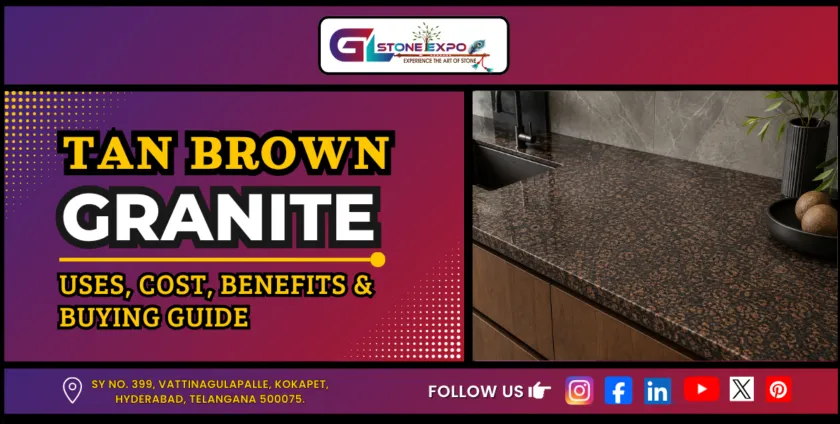
Is Tan Brown Granite the Best Choice for Your Home? A Complete Buying Guide
If you’ve been browsing slabs and keep circling back to that warm brown-and-burgundy pattern, you’re not alone. Tan Brown Granite is one of the most searched-for natural stones in India right now, and once you’ve seen a well-lit slab in person, it’s not hard to understand the appeal. It’s tough, it photographs beautifully, and — unlike a lot of imported alternatives — it won’t wreck your budget.
But a countertop or staircase isn’t a small decision, so before you commit, you deserve straight answers instead of showroom sales talk. This guide covers what Tan Brown Granite actually is, where it’s quarried, how it holds up in a real Indian kitchen, what it tends to cost, and the mistakes that trip up first-time buyers most often. Grab a cup of chai and let’s get into it.
What Is Tan Brown Granite?
Tan Brown Granite is a natural stone quarried in India, recognized by its dark brown base, black mineral flecks, and streaks of deep burgundy. Builders like it for its strength and heat tolerance, and homeowners like it because it simply looks expensive without being priced like it.
Here’s the thing about granite that a lot of first-time buyers don’t quite grasp going in: it’s not manufactured, it’s cut out of the ground. That means every slab is a little different — sometimes a lot different — and there’s no factory quality control smoothing things into uniformity. Some people find that unsettling. Honestly, once you see it installed, most people find it’s the whole point.
Key Characteristics That Define This Stone
| Feature | What You’ll See |
| Color base | Deep chocolate-brown |
| Accents | Black mineral grains, burgundy or red-brown streaks |
| Grain | Medium to coarse — gives it a layered, textured look |
| Common finishes | Polished, leathered, flamed |
| Hardness | Among the harder granites sold in India |
| Water absorption | Very low, which helps with staining |
Because of that natural variation, don’t be shocked if the slab delivered to your home looks a shade different from the sample chip you approved. It’s not a defect — it’s just how the stone works. We’ll come back to why that matters when you’re actually picking a slab.
Where Does Tan Brown Granite Come From?
The stone is quarried mainly around Karimnagar, in Telangana — one of South India’s older and better-established granite belts. This region has been feeding both domestic and export markets for decades, and Tan Brown is arguably its most recognizable product.
The Karimnagar Connection
Here’s a small detail that catches people off guard: a supplier’s shop address tells you almost nothing about where the stone was quarried. A showroom in Hyderabad, or even one in Mumbai, can absolutely be selling genuine Karimnagar-cut Tan Brown Granite. Processing and retail happen a long way from the quarry all the time. If sourcing matters to you — and for a big project, it probably should — just ask the supplier directly which quarry the material came from, and for larger orders, ask that everything come from a single batch so the pattern stays reasonably consistent.
Why Homeowners Keep Choosing Tan Brown Granite
Ask ten people why they picked this stone, and you’ll usually get some version of the same handful of reasons.
| Benefit | Why It Matters |
| Durability | Handles daily kitchen abuse without showing it |
| Heat resistance | Hot vessels straight off the stove don’t leave marks |
| Scratch resistance | Holds up better than softer stones like marble |
| Unique pattern | No two installations look exactly alike |
| Long lifespan | Decades of use with basic care |
| Design flexibility | Works in traditional and modern kitchens alike |
| Price | Cheaper than most imported marbles and exotic granites |
Built to Last
Granite sits near the top of the hardness scale among stones used in construction — noticeably harder than marble or limestone. According to the, granite’s density and low porosity make it one of the more wear-resistant options for high-traffic surfaces, which is really why it’s been the default kitchen stone for so long, in India and elsewhere. In practical terms: this isn’t something you’ll be replacing in five years because it’s looking tired.
A Look That Doesn’t Date Quickly
Trends in kitchen design move fast — matte black was everywhere a few years back, and now everyone wants warm neutrals again. Tan Brown Granite mostly sits outside that cycle. It’s earthy and rich rather than trendy, and that’s part of why a kitchen fitted with it a decade ago can still look perfectly current today. If you’re the type who’d rather not renovate again in five years just to keep up, that’s worth something.
Is Tan Brown Granite Good for Indian Kitchens?
Yes, and honestly, this is probably the real reason you clicked on this article. Indian kitchens are hard on countertops — daily tempering, turmeric splashes, oil everywhere, and a stove that rarely gets a break.
How It Handles Spices, Oil, and Heat
Because of its low porosity, Tan Brown Granite resists staining from oil and pigmented spices reasonably well, especially once it’s been properly sealed. It also shrugs off heat from hot pans far better than laminate or most budget countertop materials. That said — no natural stone is completely stain-proof, so don’t get careless. Wipe up spills before they sit for hours, and you’ll rarely have an issue.
Cabinet Pairings That Work Well
| Cabinet Color | Overall Feel |
| White | Bright, clean, makes small kitchens feel bigger |
| Cream | Warm and classic — a safe, popular choice |
| Walnut or wood tones | Rich, traditional, cozy |
| Light grey | More contemporary, good contrast |
Color Combinations and Design Ideas
Getting the surrounding colors right is honestly half the battle. A great slab paired with the wrong backsplash can end up looking muddy instead of luxurious.
Wall and Backsplash Colors That Work
Stick with white, off-white, cream, beige, or a soft warm grey on your walls and backsplash. These neutrals let the granite’s natural pattern do the talking instead of fighting it for attention. Where people usually go wrong is stacking two strongly patterned surfaces in the same room — a heavily veined backsplash next to Tan Brown Granite, for instance, tends to look busy rather than rich.
Where Can You Use Tan Brown Granite?
It’s not a one-room stone. It shows up across a surprising number of applications, residential and commercial alike.
| Setting | Common Applications |
| Residential | Kitchen counters, islands, bathroom vanities, stairs, flooring, window sills, dining tables, pooja areas |
| Commercial | Hotel lobbies, restaurant counters, office reception desks, retail flooring, apartment common areas |
Tan Brown Granite for Stairs: Style Meets Safety
Stairs take a real beating — constant footfall, the odd wet shoe after monsoon season, kids sprinting up and down. Tan Brown Granite handles that load well, but there’s one thing worth flagging before you finalize your order: the finish. A high-polish surface looks stunning on stair treads, but it can get genuinely slippery when wet. A leathered or flamed finish trades a bit of shine for real grip, and that trade-off matters more once someone’s actually navigating the stairs in socks or wet feet.
If you’ve got young kids or older family members at home, lean toward a textured finish on the treads, even if the rest of the house stays polished.
How Much Does Tan Brown Granite Cost?
There’s no single honest answer here, and anyone who quotes you one flat number without asking a single question about your project is skipping steps.
What Actually Moves the Price
| Factor | How It Affects Cost |
| Slab grade | Higher grade, fewer defects — costs more |
| Thickness | Thicker slabs (18–30mm) cost more per sq ft |
| Finish | Polished vs. leathered pricing can differ |
| Slab size | Larger usable slabs reduce wastage, often better value |
| Transport distance | Further from Karimnagar usually means higher freight |
| Fabrication | Cutting, edge profiles, cutouts all add cost |
| Installation | Labor charged separately in most quotes |
| Wastage | Complex layouts waste more material |
The number worth remembering: the slab price is almost never your final bill. A proper quotation breaks out material, fabrication, transport, and installation separately. If a supplier won’t itemize that for you, ask again — and if they still won’t, that’s a bit of a red flag.
Buying Tan Brown Granite in Hyderabad
Hyderabad buyers have it relatively easy here, given how close the city sits to Telangana’s granite belt. That said, proximity to the quarry doesn’t automatically mean every local supplier does good work — fabrication quality varies a lot more than people expect.
Before signing off on anything, ask to see the actual slab (not a sample chip), find out whether the supplier handles fabrication in-house or outsources it, confirm installation is included, and ask what kind of after-sales support they offer if something needs adjusting later.
Why GL Stone Expo Is Worth a Visit
For Hyderabad buyers comparing granite, marble, quartz, and tile side by side, GL Stone Expo in Kokapet is worth adding to your list. You can walk through and see real Tan Brown Granite slabs rather than a swatch book, talk through fabrication and installation with the team directly, and weigh it against other stones in the same visit. Their granite collection covers a fair range of finishes and grades if you want to compare before deciding.
How to Pick the Perfect Slab
This step matters more than almost anything else, and it’s the one most first-timers rush through. Two slabs sold under the exact same “Tan Brown Granite” label can look meaningfully different once you actually put them side by side.
When you’re inspecting a slab, check for cracks or fissures, uneven polishing, resin-filled patches, and how consistent the pattern looks across the piece — especially important if you need multiple slabs to match. Double-check the thickness against what you were quoted, too. It seems like a small thing until you’re the one who gets a thinner slab than expected and finds out during installation.
Finishes Explained: Polished vs. Leathered vs. Flamed
| Finish | Look | Best For |
| Polished | Glossy, reflective, deepens the color | Kitchen countertops, vanities |
| Leathered | Textured, matte, hides fingerprints well | Contemporary kitchens, islands |
| Flamed | Rough, slip-resistant | Outdoor steps, wet-exposed flooring |
Which one’s right for you really comes down to where the stone lives day to day, not just which one looks best under showroom lighting.
Caring for Your Tan Brown Granite
The good news: upkeep isn’t complicated. A soft cloth and a stone-safe cleaner handle daily cleaning fine. Wipe up oil and turmeric spills reasonably promptly, and skip harsh acidic cleaners or abrasive scrub pads — they’ll dull the surface faster than normal wear ever would.
Sealing frequency depends on your specific slab’s porosity and finish, so rather than guessing, ask your fabricator to test it and recommend a schedule. Some slabs go a couple of years between resealing; others need it more often.
Tan Brown Granite vs. Other Popular Stones
| Comparison | Tan Brown Granite | Alternative |
| vs. Black Granite | Warmer, brown-burgundy tones | Bolder, more contemporary contrast |
| vs. Quartz | Natural, unique per slab, better direct-heat tolerance | Engineered, consistent pattern, no sealing needed |
| vs. Marble | More scratch- and stain-resistant | Softer look, needs more careful maintenance |
Neither option in any of these pairs is objectively “better” — it comes down to your cabinets, your lighting, and honestly, how much natural variation you’re comfortable with.
Common Mistakes to Avoid When Buying Tan Brown Granite
Even people who’ve renovated before trip over a few predictable pitfalls.
- Judging the whole slab from a tiny sample — a palm-sized chip can’t show you how the pattern flows across a six-foot countertop. Ask to see the actual slab, or at least detailed photos and video.
- Forgetting to budget for fabrication — cutting, edges, cutouts, polishing, transport, and installation can push the real cost well past the advertised per-square-foot rate.
- Skipping the lighting check — granite reads differently under showroom fluorescents than under your kitchen’s warmer bulbs. View it under both before final approval.
- Picking the wrong finish for the job — a glossy polish looks great on a counter but can be a hazard on stairs or wet outdoor flooring.
- Not confirming quarry consistency for bigger orders — mixed batches can show noticeably different tones once installed side by side.
Conclusion: Should You Choose Tan Brown Granite?
So — is it the right call for your project? For most Indian homeowners, yes, and not by a small margin. It’s durable enough for a genuinely demanding kitchen, striking enough to anchor a room on its own, and priced reasonably against imported alternatives. It works just as well in a compact apartment kitchen as it does in a sprawling commercial lobby.
The smartest way to buy it isn’t chasing the lowest quoted rate you can find online. It’s comparing actual slabs, checking fabrication quality, and getting a full, itemized cost across a couple of suppliers before you sign anything. If you’re in Hyderabad, stopping by GL Stone Expo to see genuine Tan Brown Granite in person is a reasonable next step — take a look at their full stone catalog and compare it against other granite, marble, and quartz options while you’re at it.
Frequently Asked Questions – (FAQs)
1. Is Tan Brown Granite a smart investment for 2026?
Yes, generally. With proper installation, this durable stone can easily last 20+ years, which makes it a solid long-term pick for Indian homes — it tends to outlast cheaper laminate alternatives by a wide margin, both in looks and lifespan.
2. How many finish options does Tan Brown Granite offer?
There are 3 core finishes to choose from — polished, leathered, and flamed. Each gives you a distinct look and function, so you can match the finish to whether it’s going on a countertop, an island, or a staircase.
3. Is Tan Brown Granite genuinely heat-resistant?
Yes, quite a bit more than most budget surfaces. This natural stone tolerates direct contact with hot cookware well, making it a practical, low-stress choice for India’s heat-heavy, spice-driven cooking style.
4. What’s the ideal slab thickness for countertops?
Most fabricators recommend somewhere around 18mm to 20mm for kitchen counters. That range balances strength against cost fairly well, without adding unnecessary weight to your cabinetry.
5. How often should Tan Brown Granite be sealed?
It varies by slab, but many need resealing roughly once every 1 to 2 years. A simple water-drop test tells you quickly whether it’s time — if water beads up, you’re fine; if it soaks in, it’s due.
6. Can Tan Brown Granite survive 5+ years of heavy kitchen use?
Easily, and usually well beyond that. It’s built for exactly this kind of demand. With basic care, it resists scratching and staining well past the 5-year mark, keeping its color and polish looking close to day one.
7. Is Tan Brown Granite cheaper than imported stones?
Yes, typically. Since it’s quarried locally in India rather than shipped in, Tan Brown Granite generally costs noticeably less than imported marble or exotic granites, without giving up much on durability or looks.
8. How many cabinet colors realistically pair well with it?
At least 4 work reliably — white, cream, walnut, and light grey. Each creates a distinct feel, so there’s genuine flexibility depending on whether you want bright and airy or warm and traditional.
Visit our Kokapet showroom or send us an enquiry — our team will help you choose the right stone, finish and size for your space.
Kokapet showroom · Open Mon–Sun, 9 AM – 8 PM


Leave a Reply