
Complete Guide to Tiles: Types, Sizes, Designs & Uses
Homeowners experience difficulty throughout the tile selection process as they have to determine which type of tiles is right for their home, and they have to find the right tile size and design to match their existing home decor. Many options available, including Vitrified, Ceramic, Porcelain and various other finishes. Create a situation where users experience confusion, which leads to the wrong product choice.
The Complete Guide to Tiles provides all the information you need to complete your home with the right tile selection. This guide provides users with an easy method for making decisions by presenting all tile types and sizes along with modern design elements and their applications.
We will guide you through the entire process by presenting different tile series that you will compare to find the right option for different rooms, along with their different finish options, durability properties and expert recommendations. By completing this process, you will get complete information about the tiles that match your needs. You will also learn how to simplify the selection process.
What Are Tiles & Their Uses
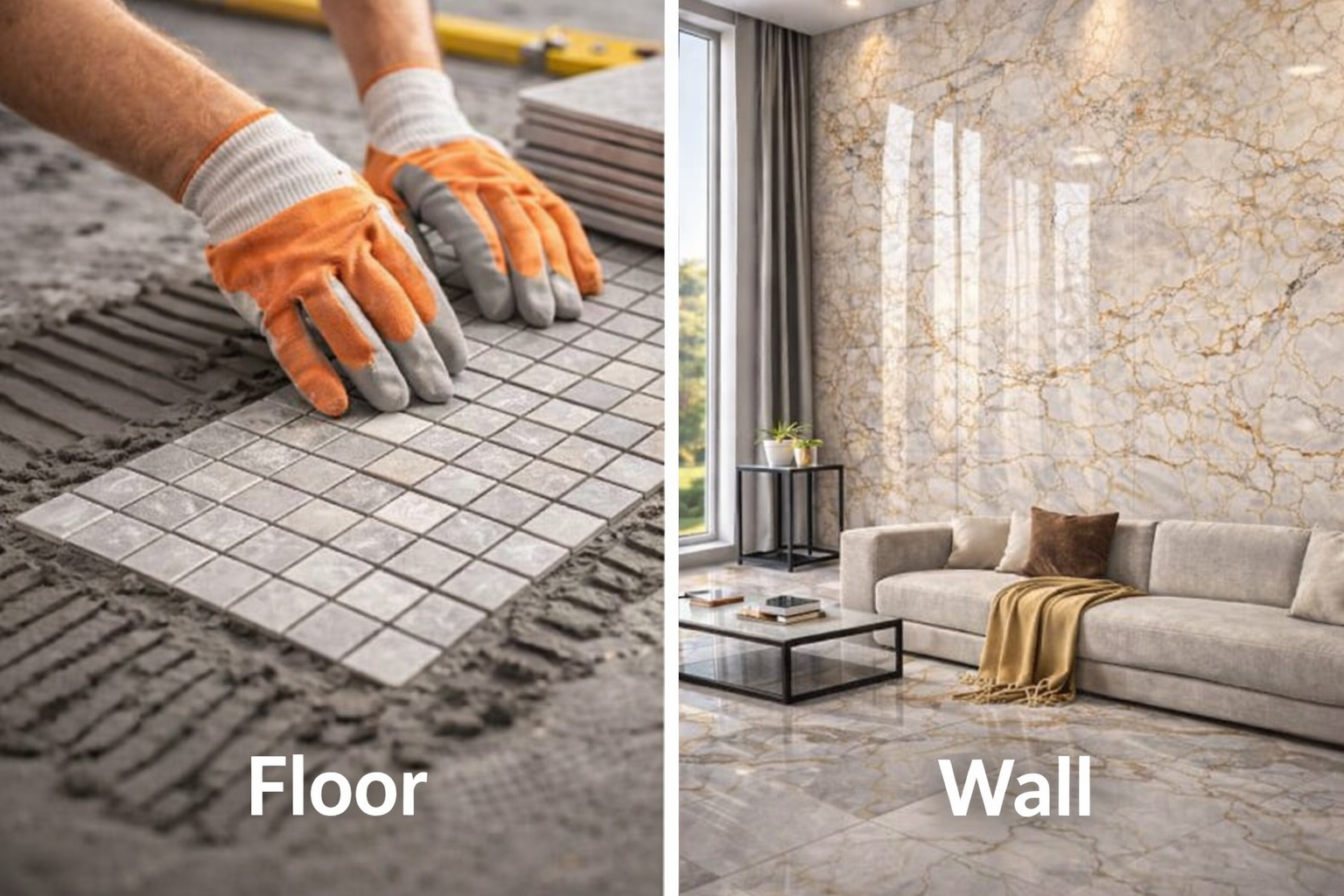
What Tiles Are Used for in Home Construction
Home builders install tile for two main reasons: To provide a protective layer and to make a visual enhancement(s) in certain parts of the home. The properties of tiles make them durable solutions to protect against water, stains, and rotting.
Thus, using tile to build the floor(s) of your home’s kitchen/bathroom is an excellent choice especially if you expect these areas to have a lot of foot traffic or be moist/wet on a regular basis.
For many homeowners, they choose to use tile because of the benefits of using tile floor and wall products. Tile is a very hard material and therefore, will hold up better to the heavy wear and tear that occurs in high-volume areas like kitchens and bathrooms when compared to other types of flooring materials. Tiles can also be cleaned easily and help to create a clean environment (such as a kitchen or bathroom) by keeping dirt and debris from accumulating and building up. Tile also comes in many different finishes including Glossy, Matte, and Carvings and other finishes which do several things together with giving the homeowner many options for appearance and design. Additionally, some types of tile contain slip-resistant features like Lappato, Leather and others, therefore are much safer than most other flooring types.
The Knowledge of Tile Applications within Residential Spaces
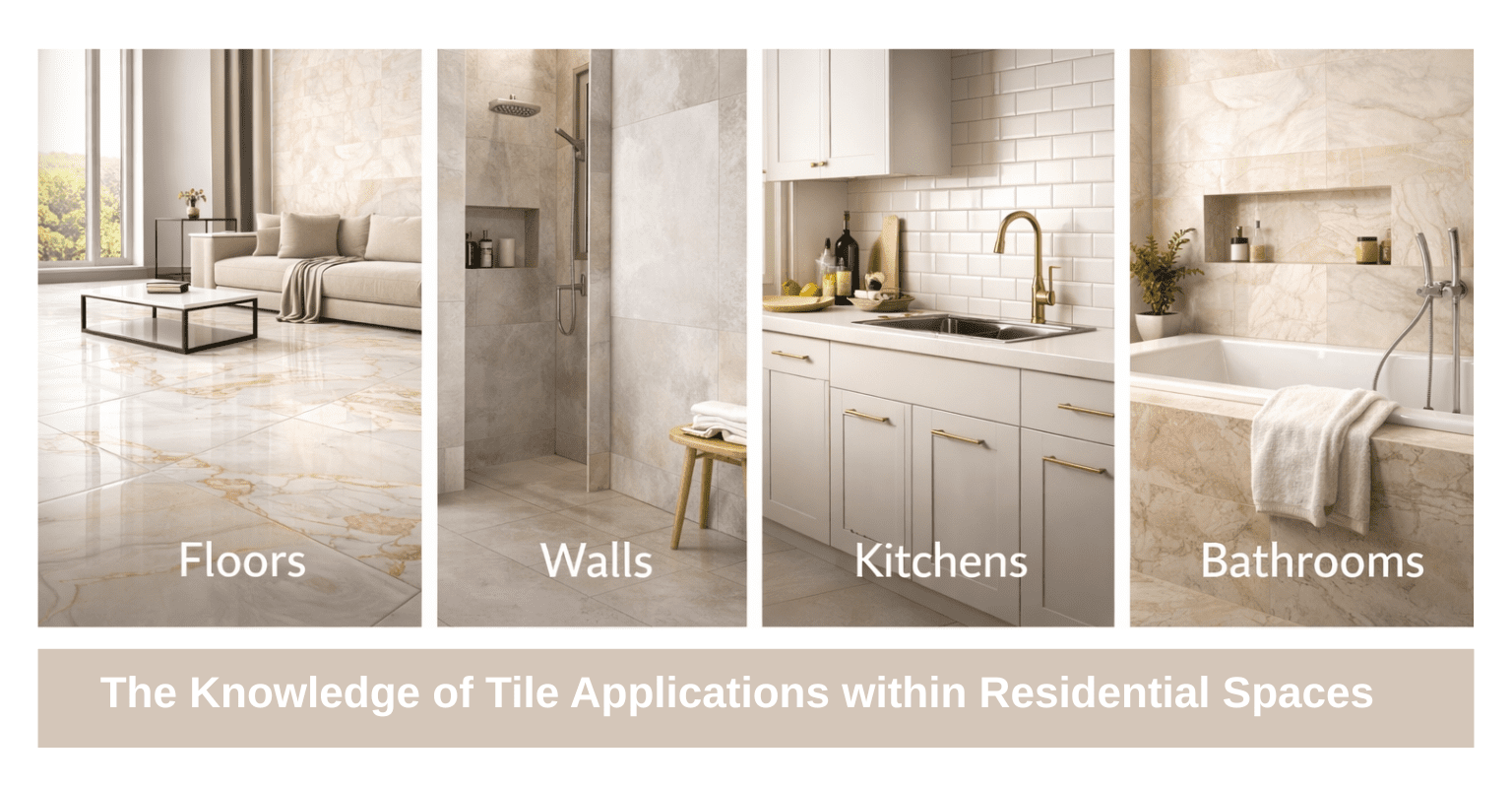
Designers use tile to make spaces in the home useful. People use tile to make their homes look nice. Some people put tile on the floor in their living room, kitchen, bathroom and bedroom. Tile is also good for bathrooms because it keeps water from getting into the floor. You can put tile in places in the home like the kitchen floor, the wall behind the sink or any other surface in the kitchen.
The tile is durable and does not get slippery so people like to use it like on balconies, patios and stairs.
When you want to put tile in your home the first thing you do is go for selection of the tile. There are different kinds of tiles and each one is made differently. This means that each kind of tile works differently and has its different usages.
Tiles come in different sizes and shapes. It is good for things like making a room look nice and it is strong. If you know how tile works in the home you can make a decision. You need to think about what you need and where you want to put the tile. You should also think about how you will use that room every day. Tile is a choice for many areas, like the kitchen, bathroom and bedroom because tile is durable and easy to clean.
Different Types of Tiles for Home Flooring
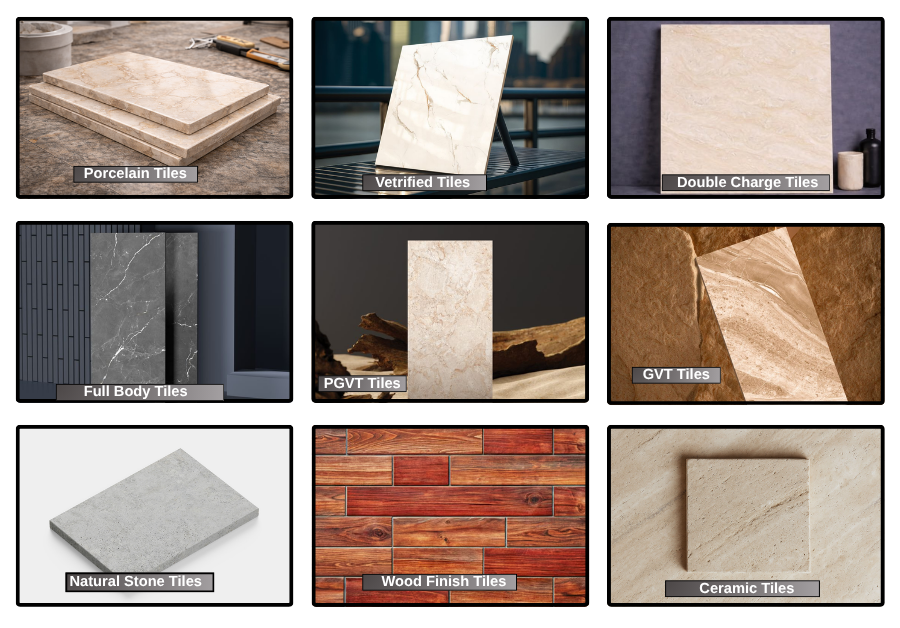
The market offers many popular tile options that serve different flooring needs through their distinct design characteristics.
Porcelain Tiles
Porcelain tiles stand out as the most robust and compact tiles because they have minimal water absorption capability. The materials serve both indoor and outdoor environments, but they perform best in spaces that experience heavy foot traffic and wet conditions.
Vitrified Tiles
Vitrified tiles provide superior strength because they have minimal porosity and maintain their durability throughout their extended lifespan. The material serves as a common flooring choice for contemporary residential spaces because it delivers lasting performance with minimal upkeep requirements.
Double Charge Tiles
Double charge tiles contain a heavy-duty wear layer, which enables them to withstand both scratching and intense foot traffic. The space functions as a perfect solution for both residential living areas and commercial environments.
Full Body Tiles
Full-body tiles maintain their original strength because they use identical material composition throughout the product. The material functions as the most suitable option for spaces that experience continuous foot traffic and industrial operations.
PGVT Tiles (Polished Glazed Vitrified Tiles)
PGVT tiles create a glossy, high-end appearance that maintains its quality over time. The product serves as an ideal choice for interior spaces that need both visual appeal and functional capabilities.
GVT Tiles (Glazed Vitrified Tiles)
GVT tiles feature a glazed surface design that enables users to select from many decorative patterns and design options. The product functions as an appropriate flooring and wall covering solution for contemporary residential spaces.
Natural Stone Tiles
Natural stone tiles made from marble and granite offer an elegant and everlasting appearance. The material needs more upkeep than vitrified materials.
Wood-Finish Tiles
Wood-finish tiles imitate the appearance of actual wood while providing enhanced durability and improved protection against water damage compared to genuine wooden products.
Ceramic Tiles
Ceramic tiles display lightweight properties and affordable pricing, which make them appropriate for applications on walls and in areas with minimal foot traffic. The material exhibits reduced strength compared to both vitrified and porcelain tiles.
Cement (Hydraulic) Tiles
Cement tiles function as decorative elements that display distinctive design patterns. The material exhibits high porosity, which demands sealing processes and maintenance activities that result in decreased product lifespan.
Designer Tiles
Designer tiles emphasize their visual aspect, together with their tactile experience and their decorative patterns, which include 3D tiles. The material functions as an optimal solution for decorative walls instead of being used on floors, which need extensive foot traffic.
Types of Wall Tiles and Floor Tiles Explained
Wall tiles and floor tiles are designed differently to serve specific functions:
- Wall Tiles are thinner, lighter, and more design-focused. They are commonly used in kitchens, bathrooms, and decorative walls.
- Floor Tiles are thicker and stronger to withstand foot traffic, weight, and wear over time.
| Room | Floor Tile | Wall Tile |
| Living Room | Vitrified / PGVT | Optional designer tiles |
| Bedroom | Vitrified / Wooden tiles | Plain/minimal |
| Bathroom | Matte (Anti-skid) | Glossy Ceramic |
| Kitchen | Vitrified | Ceramic / Subway |
| Balcony | Porcelain / Anti-skid | Simple ceramic |
| Parking | Heavy-duty parking tiles | Not required |
Some tiles, such as vitrified and porcelain tiles, can be used for both walls and floors depending on their specifications.
Modern Tile Variants (GVT, PGVT & Designer Tiles)
Modern tile technology has introduced advanced options that combine aesthetics with performance:
- GVT (Glazed Vitrified Tiles) – These tiles have a glazed surface with printed designs, offering a wide range of patterns and finishes.
- PGVT (Polished Glazed Vitrified Tiles) – Like GVT but with a polished surface, giving a glossy and premium look.
- Designer Tiles – Specially crafted tiles with unique patterns, textures, or 3D effects used for feature walls and decorative spaces.
These modern variants are popular in contemporary homes because they provide both visual appeal and durability.
Best Tile Materials for Modern Homes
Modern homes must have tiles that balance durability, style, and ease of maintenance. Some of the best tile materials include:
- Vitrified Tiles for strength and low water absorption
- Porcelain Tiles for versatility and long-lasting performance
- Ceramic Tiles for decorative and light-use areas
- PGVT & GVT Tiles for modern designs and premium finishes
- Double Charge Tiles for high-traffic durability
- Natural Stone Tiles for luxury interiors
- Wood-Finish Tiles for a natural look with low maintenance
Choosing the right tile material depends on the room, usage, and design preference, ensuring both functionality and aesthetics in your home.
Tile Types Comparison (Vitrified, Ceramic, Porcelain, GVT, PGVT)
Choosing between different tile types can be confusing, especially when each option offers unique features durability, finish, and usage. Understanding how vitrified, ceramic, porcelain, GVT, and PGVT tiles compare will help you make a more informed decision based on your space and requirements.
| Type | Look | Strength | Use | Price |
| PGVT | Glossy Premium | Very High | Living room | High |
| GVT | Designer | High | Wall + Floor | Medium |
| VT | Simple | Medium | Budget floor | Low |
| Designer | Decorative | Low | Wall design | Medium |
| Cement | Vintage | Medium | Commercial/Outdoor | Medium |
| Stone | Natural Premium | High | Luxury | High |
| Double Charge | Simple | Very High | Commercial | Medium |
Vitrified vs Ceramic Tiles: Which Is Better
- Vitrified Tiles are stronger, denser, and have very low water absorption, making them ideal for high-traffic areas like living rooms and hallways.
- Ceramic Tiles are lighter and more affordable, suitable for walls and low-traffic areas.
| Parameter | Ceramic Tiles | Vitrified Tiles |
| Composition | Made from natural clay, sand, and water | Made from clay, silica, quartz, and feldspar (highly compressed) |
| Appearance | Less glossy, more natural look | Highly glossy, smooth, premium finish |
| Texture | Slightly rough or matte | Smooth and glass-like |
| Glazing | Usually glazed (surface coating) | Can be glazed or unglazed (full body) |
| Durability | Less durable | Highly durable and long-lasting |
| Strength | Moderate strength | Very high strength |
| Water Absorption | Higher (3–10%) | Very low (<0.5%) |
| Frost Resistance | Low (can crack in cold climates) | High (resistant to frost) |
| Stain Resistance | Moderate (can stain over time) | High (stain-resistant) |
| Scratch Resistance | Less resistant | Highly scratch-resistant |
| Slip Resistance | Better (especially matte finish) | Less (can be slippery if polished) |
| Colour Resistance to UV Light | May fade over time | Does not fade, long-lasting color |
| Types | No major types | Nano vitrified, Double vitrified, Double charge, GVT, PGVT, Full body |
| Tile Sizes | Smaller sizes: 2×2, 4×2, 1×1 ( in feets*) | Larger sizes: 2 × 2, 4 × 2, 6 × 4, 8 × 2.5, 10 × 2.5 ( in feets*) |
| Thickness | 6 mm – 12 mm | 9 mm – 15 mm |
| Installation | Easy to cut and install | Harder to cut, requires skilled labor |
| Maintenance | Requires more maintenance | Low maintenance |
| Uses | Walls, bathrooms, kitchens; Damp areas like kitchen wall, toilet, bathroom flooring | Indoor & outdoor; Living rooms, bedrooms, offices, public places, hotels, hospitals |
| Cost | Cheaper | More expensive |
Which is better?
If you need durability and long-term performance, vitrified tiles are the better choice. For decorative or lighter-use areas, ceramic tiles work well.
Porcelain vs Vitrified Tiles: Durability Comparison
- Porcelain Tiles are a type of vitrified tile, but denser and less porous, making them highly durable and suitable for both indoor and outdoor use.
- Vitrified Tiles are also durable but slightly less dense compared to porcelain.
Key Difference: Porcelain tiles offer higher strength and resistance, especially in heavy-use or outdoor areas, while vitrified tiles are excellent for indoor flooring.
GVT vs PGVT Tiles: Full Comparison Guide
- GVT (Glazed Vitrified Tiles) have a glazed surface with digital prints, offering a variety of designs and finishes.
- PGVT (Polished Glazed Vitrified Tiles) are similar but come with a polished surface, giving a glossy and premium appearance.
| Parameter | PGVT (Polished Glazed Vitrified Tiles) | GVT (Glazed Vitrified Tiles) |
| Composition | Vitrified body + digital print + glaze + polishing layer | Vitrified body + digital print + glaze |
| Appearance | High gloss, Mirror finish, Luxury look | Matte / Semi-gloss / Glossy, Natural look |
| Texture | Smooth & shiny | Smooth / slightly textured |
| Glazing | Double processed (glaze + polish) | Single glaze layer |
| Durability | Medium to high | Medium to high |
| Strength | Strong but surface polish sensitive | Strong and more practical |
| Water Absorption | Very low (<0.3%) | Very low (<0.5%) |
| Frost Resistance | Good (indoor use mostly) | Better (can be used outdoors also) |
| Stain Resistance | High | High |
| Scratch Resistance | Medium (scratch visible on gloss) | Better than PGVT |
| Slip Resistance | Low (slippery) | Medium to high (better grip) |
| Colour Resistance to UV Light | Good (indoor stable) | Very good (outdoor stable) |
| Types | Glossy PGVT, High Gloss, Nano-polished | Matte GVT, Glossy GVT, Rustic GVT |
| Tile Sizes | 600×600, 600×1200, 800×1600, 1200×2400 | 600×600, 600×1200, 300×600 |
| Thickness | 9–15 MM | 9–15 MM |
| Installation | Requires a level surface, careful handling (polish sensitive) | Easy installation, Less sensitive |
| Maintenance | Easy cleaning, but marks are visible | Easy cleaning, low visibility of marks |
| Uses | Living room, bedroom, luxury interiors | Floor + wall, bathroom, kitchen, outdoor |
| Cost | Higher (premium category) | Medium (budget-friendly) |
Which to choose?
Choose GVT for matte or subtle finishes and PGVT for a shiny, luxurious look. Both are suitable for modern interiors.
Double Charge Tiles vs Full Body Tiles Difference
- Double Charge Tiles have a thick top layer (2–3 mm) that makes them highly durable and ideal for heavy traffic areas.
- Full Body Tiles have the same material and color throughout the tile, making them extremely resistant to scratches and wear.
Key Difference: Double charge tiles are great for durability with design, while full body tiles are best where long-term wear resistance is critical.
Tile Finishes & Surface Types
The finish of a tile plays a crucial role in both appearance and functionality. It affects how a tile looks, feels, and performs in different areas of your home. Choosing the right surface type helps improve safety, maintenance, and design, especially in spaces like bathrooms and kitchens.
Glossy vs Matte Tiles: Which Is Better
- Glossy Tiles have a shiny, reflective surface that enhances brightness and makes spaces look larger. They are ideal for walls and low-traffic areas.
- Matte Tiles have a non-reflective surface, offering better grip and a more natural look, making them suitable for floors and wet areas.
| Feature | GVT Tiles | PGVT Tiles | Porcelain Tiles (General) |
| Surface Finish | Matte, Satin, Rustic, Rocker, Textured | Always High-Gloss/Mirror Finish | Available in Matte, Polished, and Textured |
| Gloss Level | Low to Medium | Very High | Variable |
Which is better? Choose glossy tiles for aesthetics and wall applications, while matte tiles are better for flooring where slip resistance is important.
Polished vs Unpolished Tiles: Key Differences
- Polished Tiles are smooth and shiny, giving a premium and elegant finish. However, they can be slippery when wet.
- Unpolished Tiles have a more natural, slightly rough surface, providing better traction and safety.
Key Difference: Polished tiles focus on appearance, while unpolished tiles are better for functionality and safety.
Textured Tiles vs Smooth Tiles Comparison
- Textured Tiles have a rough or patterned surface that improves grip, making them ideal for bathrooms, outdoor areas, and wet zones.
- Smooth Tiles are flat and sleek, easier to clean, and commonly used in living rooms and bedrooms.
Which to choose? Use textured tiles where slip resistance is needed, and smooth tiles where easy maintenance is needed.
Best Tile Finish for Bathroom and Kitchen
- Bathroom: Matte or textured tiles are best for floors to prevent slipping, while glossy or polished tiles can be used on walls for a clean and bright look.
- Kitchen: Matte or satin finishes work well for flooring due to better grip, while glossy tiles are popular for backsplashes because they are easy to clean.
Tile Sizes, Thickness & Layout Guide
Choosing the right tile size, thickness, and layout pattern plays a major role in how your space looks and functions. The correct combination can make a room appear larger, improve durability, and enhance the design of your home.
Standard Tile Sizes for Floor and Wall
Tiles are available in various standard sizes depending on their use:
- Floor Tiles: 600×600 mm, 800×800 mm, 600×1200 mm
- Wall Tiles: 300×600 mm, 300×450 mm, subway-style tiles
- Large Format Tiles: 800×1600 mm and above for modern, seamless looks
Which Tile Size Is Best for Small Rooms
- Medium to Large Tiles (600×600 mm) help reduce grout lines and make small rooms appear bigger.
- Light-colored tiles enhance openness and brightness.
- Avoid very small tiles on floors, as too many joints can make the space look cluttered.
Tile Thickness Guide for Home Flooring
Tile thickness affects strength and durability:
- Wall Tiles: Usually 6–10 mm thick
- Floor Tiles: Typically 8–12 mm thick
- Heavy-Duty Tiles: 10–12 mm or more for high-traffic areas
Tile Layout Patterns for Modern Homes
Tile layout patterns can completely change the visual appeal of a space:
- Straight Lay (Grid Pattern): Clean and simple, most commonly used
- Staggered (Brick Pattern): Adds movement and style, great for rectangular tiles
- Herringbone Pattern: Premium and modern look, often used for feature areas
- Diagonal Layout: Makes small rooms look larger and more dynamic
Tile Design Styles & Trends
Tile design plays a major role in defining the look and feel of your home. With evolving interior trends, tiles are no longer just functional—they are a key design element that adds style, texture, and personality to any space. Choosing the right design helps create a modern, elegant, or even timeless interior.
Latest Tile Designs for Modern Homes
Modern homes focus on clean, minimal, and sophisticated designs:
- Large Format Tiles for a seamless and spacious look
- Neutral Tones like beige, grey, and white for a modern aesthetic
- Stone & Marble Look Tiles for a premium feel without high maintenance
- Subtle Patterns that add texture without overwhelming the space
Modern Wall Tiles Design for Interiors
Wall tiles are widely used to enhance interiors and create focal points:
- 3D Wall Tiles for textured and eye-catching designs
- Geometric Patterns for a stylish and artistic look
- Subway Tiles for a clean and classic appearance
- Accent Wall Tiles to highlight specific areas like TV units or headboards
Marble Finish vs Wooden Finish Tiles
- Marble Finish Tiles offer a luxurious and elegant look, ideal for living rooms and large spaces. They reflect light well and enhance brightness.
- Wooden Finish Tiles provide a warm, natural appearance like real wood, perfect for bedrooms and cozy interiors. They must be less maintenance than actual wood flooring.
Trending Floor Tiles Design Ideas
- Matte Finish Tiles for a modern and non-slip surface
- Terrazzo Style Tiles for a trendy and artistic appeal
- Concrete Look Tiles for industrial-style interiors
- Patterned Tiles for statement flooring in specific areas
Best Tiles for Each Room (Room-Wise Guide)
Choosing the right tiles for each room is essential because every space in your home has different functional and design requirements. From durability in high-traffic areas to safety in wet zones, selecting the appropriate tile ensures both comfort and long-lasting performance.
| Room | Floor Tile | Wall Tile |
| Living Room | Vitrified / PGVT | Optional designer tiles |
| Bedroom | Vitrified / Wooden tiles | Plain/minimal |
| Bathroom | Matte (Anti-skid) | Glossy Ceramic |
| Kitchen | Vitrified | Ceramic / Subway |
| Balcony | Porcelain / Anti-skid | Simple ceramic |
| Parking | Heavy-duty parking tiles | Not required |
Best Tiles for Living Room Floor Design
The living room is a high-traffic and visually important area, so tiles should be both durable and stylish:
- Vitrified Tiles for strength and long-lasting performance
- Large Format Tiles for a spacious and seamless look
- Glossy or Polished Finish to enhance brightness and elegance
Best Anti-Skid Tiles for Bathroom Floor
Bathrooms must have tiles that focus on safety and water resistance:
- Matte or Textured Tiles for better grip and slip resistance
- Porcelain Tiles for low water absorption and durability
- Small or Medium Tiles to increase grip due to more grout lines
Best Tiles for Kitchen Wall and Floor
Kitchens need tiles that are easy to clean and resistant to stains and heat:
- Ceramic or Glossy Tiles for backsplashes (easy to clean)
- Matte or Satin Finish Tiles for flooring (better grip)
- Vitrified or Porcelain Tiles for durability and low maintenance
Best Tiles for Bedroom Flooring Comfort
Bedrooms need tiles that provide comfort and a warm appearance:
- Wooden Finish Tiles for a cozy and natural look
- Matte Finish Tiles for a soft and non-slippery surface
- Large Tiles for a clean and minimal design
Tile Properties Explained (Must Know Before Buying)
Before selecting tiles, it’s important to understand the key technical properties that affect their performance, safety, and durability. These factors help you choose tiles that not only look good but also last longer and perform well in different conditions.
Water Absorption Rate in Tiles Explained
Water absorption indicates how much moisture a tile can absorb:
- Low Water Absorption (<0.3%) – Found in vitrified and porcelain tiles; ideal for bathrooms, kitchens, and outdoor areas
- Medium Absorption – Suitable for indoor flooring with less exposure to water
- High Absorption – Usually, ceramic tiles are better for wall applications
Slip Resistance Rating in Tiles: Meaning
Slip resistance determines how safe a tile is, especially in wet areas:
- High Slip Resistance – Textured or matte tiles, ideal for bathrooms and outdoor areas
- Medium Slip Resistance – Suitable for kitchens and general indoor flooring
- Low Slip Resistance – Glossy or polished tiles are better for walls
Scratch-Resistant Tiles for High-Traffic Areas
Scratch resistance is important for areas with heavy usage:
- Porcelain and full-body tiles are highly scratch-resistant
- Double Charge Tiles have a thick surface layer that resists wear
- Matte Finish Tiles tend to hide scratches better than glossy tiles
Stain-Resistant Tiles for Home Flooring
Stain resistance ensures tiles remain clean and easy to maintain:
- Vitrified and Porcelain Tiles are highly stain-resistant due to low porosity
- Glazed Tiles (GVT/PGVT) resist stains on the surface layer
- Glossy Tiles are easier to wipe clean compared to textured ones
How to Choose the Right Tiles (Step-by-Step Guide)
Selecting the right tiles for your home involves more than just picking a design you like. It requires understanding your space, usage needs, and the practical factors that affect durability and maintenance. Following a step-by-step approach helps you make a confident and informed decision.
How to Choose Tiles for Home Step by Step
- Identify the Area – Decide where the tiles will be used (living room, bathroom, kitchen, etc.).
- Select the Tile Type – Choose between ceramic, vitrified, porcelain, or other types based on usage.
- Choose the Right Size – Larger tiles for spacious areas, medium sizes for smaller rooms.
- Pick the Finish – Matte for safety, glossy for aesthetics, textured for grip.
- Check Durability – Ensure the tile can handle foot traffic and daily wear.
Factors to Consider When Buying Tiles
- Durability – Important for high-traffic areas like living rooms and hallways
- Water Resistance – Essential for bathrooms and kitchens
- Slip Resistance – Critical for safety in wet areas
- Maintenance – Choose tiles that are easy to clean and maintain
- Design & Color – Match tiles with your interior theme
How to Select Tiles for Each Room
- Living Room – Durable, large-format tiles with a premium finish
- Bathroom – Anti-skid, water-resistant tiles for safety
- Kitchen – Easy-to-clean wall tiles and slip-resistant floor tiles
- Bedroom – Comfortable, matte or wooden finish tiles
Tips to Choose Perfect Tiles for Home
- Choose light colors to make spaces look bigger
- Prefer larger tiles for fewer grout lines and a cleaner look
- Use matte or textured tiles in wet areas for safety
- Mix design and functionality for the best results
Tile Installation Basics
Proper installation is essential to ensure tiles last long and perform well. Even the best tiles can fail if not installed correctly, so understanding the basics helps you achieve a strong and durable finish.
Tile Installation Process Step by Step
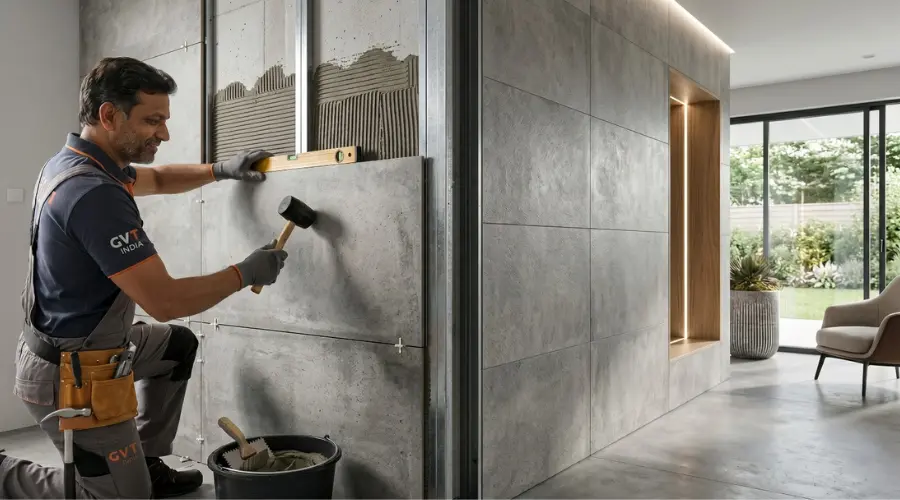
- Surface Preparation – Clean, level, and dry the surface before installation
- Layout Planning – Mark guidelines to ensure proper alignment
- Applying Adhesive – Spread tile adhesive evenly using a notched trowel
- Placing Tiles – Lay tiles carefully with consistent spacing
- Grouting – Fill gaps between tiles after the adhesive sets
- Final Cleaning – Clean excess grout and polish the surface
How Tiles Are Installed on the Floor and Wall
- Floor Installation requires a strong base, proper leveling, and thicker tiles for durability.
- Wall Installation uses lighter tiles and requires proper adhesive bonding to prevent slipping.
Tile Adhesive vs Cement: Which Is Better
- Tile Adhesive provides better bonding, flexibility, and long-term durability.
- Cement Mortar is traditional but may not offer the same strength and precision.
Tile Spacing and Grout Guide
- Maintain uniform spacing using tile spacers
- Choose a grout color that matches or contrasts with the tiles
- Use water-resistant grout in wet areas
Tile Maintenance & Cleaning
Maintaining tiles properly helps preserve their appearance and extend their lifespan. Regular cleaning and the right methods ensure tiles remain fresh and stain-free.
How to Clean Floor Tiles at Home
- Sweep or vacuum regularly to remove dust
- Use mild cleaning solutions for mopping
- Avoid harsh chemicals that may damage the surface
Best Way to Maintain Tile Flooring
- Clean spills immediately to prevent stains
- Use soft cleaning tools to avoid scratches
- Periodically, deep-clean grout lines
Easy to Clean Tiles for Kitchen and Bathroom
- Glossy and glazed tiles are easier to wipe and maintain
- Low-porosity tiles resist stains and moisture
How to Remove Stains from Tiles
- Use baking soda or mild cleaners for tough stains
- Clean grout with a brush for better results
- Avoid abrasive tools that can damage the tile surface
Common Mistakes to Avoid When Buying Tiles
Avoiding common mistakes can save time, money, and future issues. Many homeowners focus only on design and overlook important functional aspects.
Mistakes to Avoid When Choosing Tiles
- Choosing tiles based only on appearance
- Ignoring durability and usage requirements
- Not checking tile quality and finish
Wrong Tile Size Selection Problems
- Small tiles can make large spaces look busy
- Oversized tiles may not suit compact areas
Ignoring Slip Resistance in Tiles
- Using glossy tiles in wet areas increases the risk of slipping
- Always check slip resistance for bathrooms and outdoors
Common Tile Buying Mistakes Homeowners Make
- Not calculating the required quantity properly
- Ignoring future maintenance needs
- Skipping professional advice
Tile Durability & Lifespan
Tiles are known for their long lifespan, but durability depends on the type, quality, and usage.
How Long Do Tiles Last in a House
- High-quality tiles can last 10–20+ years with proper maintenance
- Lifespan varies based on usage and environment
Long Lasting Tiles for Home Flooring
- Porcelain and vitrified tiles are highly durable
- Full body and double charge tiles perform well in heavy-use areas
Which Tiles Are Best for Heavy-Use Areas
- Double charge tiles for high foot traffic
- Porcelain tiles for strength and durability
Tiles Durability Comparison by Type
- Most Durable: Porcelain, Full Body Tiles
- Moderate Durability: Vitrified Tiles
- Lower Durability: Ceramic Tiles
Indoor vs Outdoor Tiles
Tiles used indoors and outdoors have different properties and requirements.
Difference Between Indoor and Outdoor Tiles
- Indoor tiles focus on design and comfort
- Outdoor tiles need strength and weather resistance
Best Tiles for Outdoor Flooring
- Porcelain and textured vitrified tiles
- Stone tiles for natural outdoor aesthetics
Weather-Resistant Tiles for Exterior Use
- Low water absorption tiles perform better outdoors
- Frost and heat-resistant tiles ensure durability
Anti-Skid Tiles for Outdoor Areas
- Textured and matte tiles provide better grip
- Essential for balconies, patios, and staircases
Conclusion
Before making your final decision, it is always a smart move to follow a proper tile selection checklist. This helps you avoid costly mistakes and ensures that the tiles you choose are practical, durable, and suited to your actual needs.
Start by identifying the right tile material based on usage and location. Different spaces require different performance levels, so selecting tiles according to where they will be installed is essential for long-term results.
Next, pay attention to tile size, thickness, and finish. These factors directly affect both the visual outcome and functionality. The right combination will help you achieve a balanced look while meeting performance requirements.
It is equally important to ensure that the tiles match the specific conditions of each room. Safety, durability, and maintenance should be considered carefully, especially in areas like bathrooms, kitchens, and outdoor spaces.
If you are unsure, focus on practical usage and daily lifestyle needs. Choosing tiles based on how frequently the space is used and how easy they are to maintain will make a significant difference over time.
In the end, the goal is to balance design with performance. Tiles should not only enhance the appearance of your space but also support long-term durability and ease of use.
To make a confident and well-informed choice, visit GL Stone Expo, where you can explore a wide range of tiles and get expert guidance tailored to your space and requirements.
Frequently Asked Questions – (FAQs)
1. Which tiles are best for home flooring in Hyderabad?
The best tiles for home flooring are vitrified tiles and porcelain tiles because they offer high durability, low water absorption, and long lifespan. For living rooms and bedrooms, vitrified tiles are ideal, while porcelain tiles are better for heavy-use and outdoor areas.
2. What is the difference between vitrified tiles and ceramic tiles?
Vitrified tiles are stronger, more durable, and water-resistant, making them suitable for floors and high-traffic areas. Ceramic tiles are lighter and more affordable, but they are mainly used for walls and low-traffic spaces like kitchens and bathrooms.
3. Which tiles are best for bathrooms to avoid slipping?
For bathrooms, anti-skid tiles, matte finish tiles, and textured tiles are the best options. These tiles provide better grip and reduce the risk of slipping in wet areas compared to glossy tiles.
4. What tile size is best for small rooms?
For small rooms, 600×600 mm tiles or medium-to-large format tiles work best because they reduce grout lines and make the space look bigger. Light-colored tiles also help create a more open and spacious feel.
5. Which is better: glossy tiles or matte tiles?
Glossy tiles are better for walls and low-traffic areas because they reflect light and enhance brightness. Matte tiles are better for floors, especially in kitchens and bathrooms, as they provide better slip resistance.
6. Are porcelain tiles better than vitrified tiles?
Porcelain tiles are a type of vitrified tile but are denser and more durable, making them better for outdoor use and heavy traffic areas. Vitrified tiles are excellent for indoor flooring due to their balance of durability and design.
7. Which tiles are best for the kitchen floor and walls?
For kitchen floors, matte or vitrified tiles are best because they provide grip and durability. For kitchen walls or backsplashes, ceramic or glossy tiles are ideal as they are easy to clean and maintain.
8. What are GVT and PGVT tiles, and which one should I choose?
GVT (Glazed Vitrified Tiles) come in matte and natural finishes, making them practical for daily use.
PGVT (Polished Glazed Vitrified Tiles) have a glossy finish and are better for luxury interiors. Choose GVT for functionality and PGVT for premium aesthetics.
9. Which tiles are best for high-traffic areas?
For high-traffic areas like living rooms, offices, or commercial spaces, double charge tiles, full body tiles, and porcelain tiles are the best due to their high strength and scratch resistance.
10. How do I choose the right tiles for my home?
To choose the right tiles:
- Identify the area of use (bathroom, kitchen, living room)
- Select the tile type (vitrified, ceramic, porcelain)
- Choose the finish (matte for safety, glossy for design)
- Check durability, water resistance, and maintenance
11. Which tiles are easy to clean and maintain?
Glazed tiles, vitrified tiles, and porcelain tiles are easiest to maintain because they have low porosity and resist stains. Glossy tiles are especially easy to wipe clean in kitchens and bathrooms.
12. Are tiles better than marble or wood flooring?
Tiles are generally better because they are more durable, cost-effective, water-resistant, and low maintenance compared to marble and wood. Wood-look tiles give the same aesthetic without maintenance issues.
13. What thickness of tiles is best for flooring?
For flooring, tiles with 8–12 mm thickness are ideal. For heavy-duty or commercial areas, thicker tiles (10–12 mm or more) provide better strength and durability.
14. Which tiles are best for outdoor use?
For outdoor areas like balconies and patios, porcelain tiles, textured vitrified tiles, and natural stone tiles are best because they are weather-resistant and anti-skid.
15. How long do tiles last in a house?
High-quality tiles like vitrified and porcelain can last 15–20 years or more with proper installation and maintenance. Their lifespan depends on usage and care.
16. What mistakes should I avoid when buying tiles?
Common mistakes include:
- Choosing tiles only based on design
- Ignoring slip resistance in wet areas
- Selecting the wrong tile size
- Not checking durability and usage
17. Are large tiles better than small tiles?
Large tiles are better for modern homes because they create a seamless look and reduce grout lines. Small tiles are useful only in areas where extra grip is needed, like bathrooms.
18. Which tiles are best for living room flooring?
For living rooms, large vitrified tiles, PGVT tiles, or polished tiles are best as they provide a premium look, durability, and easy maintenance.
- By: Rajesh" >Rajesh
- Tags: ceramic tiles, Double charge Tiles, floor tiles, full body tiles, GVT tiles, indoor tiles, natural stone tiles, outdoor tiles, pgvt tiles, porcelain tiles, Tile Installation Basics, Tiles, Types of tiles, vetrified tiles, waal tiles
- Category: Blog
- 0 comment
Leave a Reply